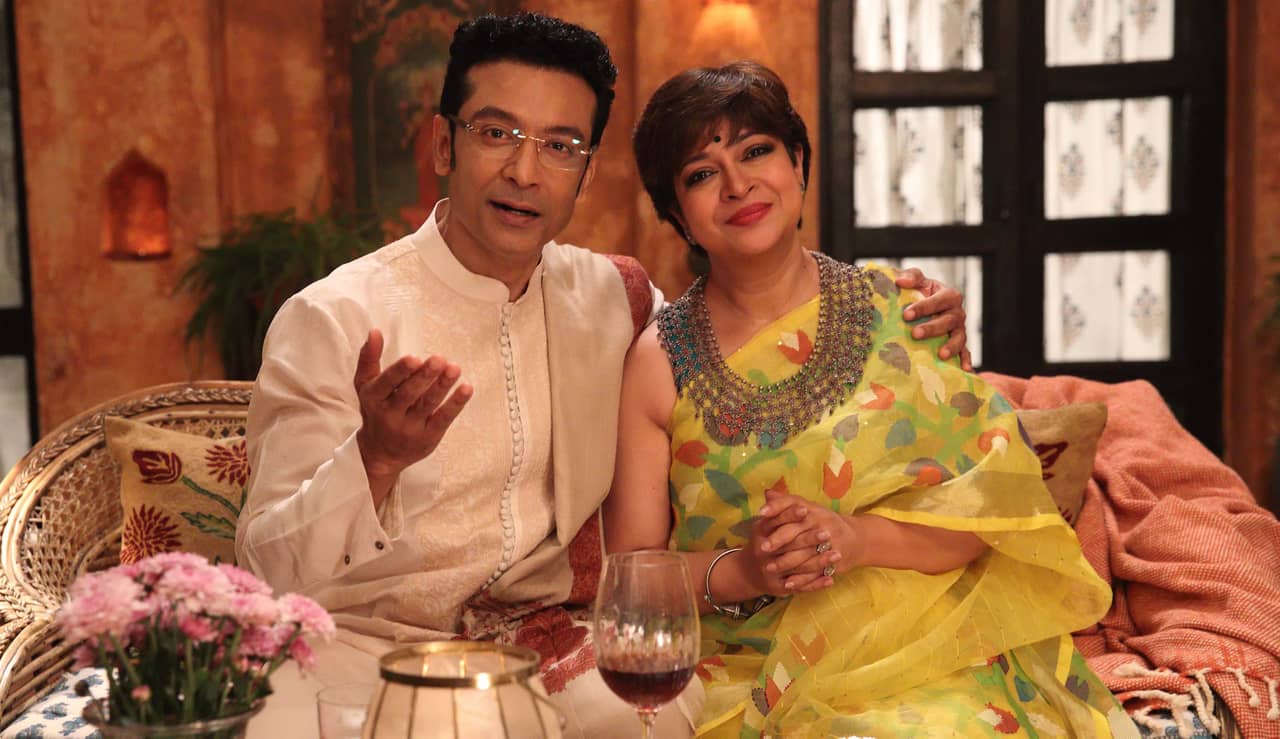
An Indian tech professional has alleged that her European manager, who is married, began targeting her professionally after she rejected his romantic advances. In a viral Reddit post, the woman claimed that her married boss started delaying her salary and micromanaging her, turning her professional life "a mess." The employee, who works remotely for a small 10-employee company, alleged that her European manager confessed to having romantic feelings during a one-on-one call earlier this year. After she rejected him, he reportedly began throwing tantrums, negatively impacting her work life.
"Turns out he got hurt & told somebody, and that somebody moulded his mind or something, that he should let me go, that now this boss is throwing all sorts of tantrums at me, questioning my every move, work, etc. He even remarked, she doesn't work, just clocks in on time. I don't know if the person suggested letting me go emotionally, or if this boss just doesn't have enough balloons to own his feelings & is trying all sorts to get me out of the job because I broke his heart. I just want to keep things professional," the post read.
The woman further alleged that her manager displays jealous behaviour, particularly when she interacts with male colleagues. He frequently checks in on her when she's offline, questioning her well-being. Professionally, she has faced challenges, including delayed salaries, tasks outside her role, and public reprimands for mistakes she didn't make, suggesting that he's using work-related issues to express personal resentment.
"Apparently, he may have developed feelings as early as December, and instead of handling it maturely, he's now making things difficult for me professionally. Earlier, he had given me a couple of days off without deducting leave — I thought it was because of my performance and loyalty, but now I wonder if it was something else," he added.
Due to her current role's flexibility, which allows her to spend more time with her family, she's unable to consider switching jobs despite the toxic work environment. "I've held on to this job mainly because it's remote, gives me flexibility with family responsibilities, and is financially efficient (lower taxes, etc.). But this emotional back-and-forth is becoming unbearable. The job market is not great right now, so switching is tough," she added.
Many expressed solidarity with her and criticised the company's handling of the situation. One user said, "The best thing for you to do would perhaps be to prepare for packing your bags from here and joining somewhere else. Since he is your boss, even POSH will not be taken seriously because HRs work for companies and not for employees. I know what I am suggesting sounds like running, but we are just bunnies in this world, and we gotta act in our interests. Start preparing and switch if possible."
Another commented, "Pick up your stuff and leave the company, now it will become more toxic than ever with this in, protect your mental wellbeing."
A third added, "Job switch is the only option. That is the sad reality."
The Indian Army on Sunday said it will bear the study expenses of a ten-year-old boy, who supplied little meals to soldiers battling gunfight in a Punjab village during Operation Sindoor.
Shvan Singh, earlier reported as 'Svarn' Singh, had run errands for the soldiers posted in Tara Wali village.
As firing went underway, Singh took water, ice, tea, milk, and lassi to soldiers as they exchanged fire with the Pakistan Army.
In recognition of the boy's courage and enthusiasm, the Indian Army's Golden Arrow Division has committed to fully sponsor Shvan's education.
During a ceremony at Ferozepur Cantonment on Saturday, Lt Gen Manoj Kumar Katiyar, General Officer Commanding-in-Chief, Western Command, also felicitated the boy.
The army said Shvan's story serves as a reminder of the "quiet heroes" across the country who deserve recognition and support.
Shvan, whose village lies in Mamdot area of Ferozepur district, had earlier said he too wants to join the army when he grows up.
"I want to become a 'fauji' when I grow up. I want to serve the country," the boy had said in May.
His father had then said, "We are proud of him. Even soldiers loved him." He said the class 4 student supplied the ration on his own without anyone asking him to do it.
Tara Wali village is around 2 km from the international border.
Under Operation Sindoor, the Indian armed forces carried out pre-dawn missile strikes on May 7 on nine terror targets in Pakistan and Pakistan-Occupied Kashmir.
The targets included the Jaish-e-Mohammad stronghold of Bahawalpur and Lashkar-e-Taiba's base in Muridke.
The operation was launched in response to the April 22 Pahalgam terror attack that claimed 26 lives.
Following the Indian action, Pakistan launched an offensive against Indian military bases and resorted to shelling the border areas for the next three days.
(Except for the headline, this story has not been edited by NDTV staff and is published from a syndicated feed.)
A veterans' cricket match in Birmingham involving India and Pakistan in the World Championship of Legends was cancelled after Indian players, including Shikhar Dhawan, refused to be a part of it citing the Pahalgam terror attack in April. The second edition of the England and Wales Cricket Board (ECB) tournament, which is co-owned by Bollywood star Ajay Devgn, started on June 18 at Edgbaston here and is scheduled for an August 2 final. World Cup winner Yuvraj Singh is the captain of the India Champions, while the squad also features the likes of Dhawan, Harbhajan Singh, Yusuf Pathan, Irfan Pathan, Suresh Raina, Robin Uthappa and Varun Aaron among others.
The WCL organisers shared a statement on their X account, detailing the decision of cancellation and said their intention while conducting the match was to recreate some "happy memories." "After hearing the news that the Pakistan hockey team will be coming to India this year, and seeing the recent India vs Pakistan volleyball match along with a few other fixtures between the two nations in different sports, we thought of continuing with the India vs Pakistan match at WCL, just to create some happy memories for people around the globe.
"But maybe in the process, we ended up hurting the feelings of many and stirring emotions," the WCL statement read.
The Pakistan team has in its ranks captain Shahid Afridi, Younis Khan, Sohail Tanvir, Wahab Riaz, Kamran Akmal among a host of yesteryear players.
The organisers also apologised for "unintentionally causing discomfort" to Indian legends.
"Hence, we have decided to call off the India-Pakistan match. We sincerely apologise again for hurting the sentiments and hope people will understand that all we ever wanted was to bring a few happy moments to the fans," it read.
Former India opener Dhawan also shared a statement on X, announcing his stand not to participate in the match against Pakistan.
"This is to formally reiterate and confirm that Mr. Shikhar Dhawan will not be participating in any matches against the Pakistan team in the upcoming WCL League. This decision was communicated earlier during our discussion on call and WhatsApp dated 11th May 2025," read his statement.
Dhawan made it clear that he has taken the call in view of the current "geopolitical" situation between India and Pakistan in the aftermath of Pahalgam terror attack and the ensuing Operation Sindoor carried out by the country.
Operation Sindoor had led to a brief military showdown between the two arch foes before India agreed to halt its operations on Pakistan's request for a cease fire. "In view of the current geopolitical situation and the prevailing tensions between India and Pakistan, Mr. Dhawan and his team have taken this position after due consideration.
"We respectfully request the league's understanding and cooperation on this matter," he said in the statement.
Off-spin legend Harbhajan, a sitting Rajya Sabha MP, Yusuf, who is also a Member of Parliament, and Irfan too have conveyed their decision to boycott the match against Pakistan, though they are yet to issue a statement in this regard.
The players received a lot of flak on social media for agreeing to the play against the Pakistan team.
India had defeated Pakistan by five wickets to win the inaugural edition of the six-team legends tournament last year in Edgbaston.
While India does not engage with Pakistan in any bilateral sporting activities because of the existing geopolitical scenario, the two nations often meet each other at various levels of competitions featuring Olympic sports.
In fact, the Indian government has given its approval for Pakistan's participation in several major events to be hosted in India this year, including the Hockey Asia Cup (August), Junior Hockey World Cup (November–December), Junior Shooting World Cup (September), and the World Para Athletics Championships (October).
The reason being that any move to block Pakistan, in the aftermath of the Pahalgam terror attack that killed 26 tourists, would have been a violation of the Olympic charter, which is like a constitution for the Olympic Movement.
Rule 44 of the Charter specifically prohibits National Olympic Committees from excluding athletes based on "racial, religious or political reasons". Failure to grant visas can lead to "international isolation and loss of hosting rights for future events." In cricket, India and Pakistan do not engage in bilateral series, limiting their face-offs to global ICC events such as the World Cup and Champions Trophy.
A hybrid hosting model was introduced during this year's Champions Trophy, under which India played its matches at a neutral venue — Dubai — while the rest of the tournament was held in Pakistan.
Following that precedent, Pakistan will play all its matches in Colombo during the Women's ODI World Cup this year. The tournament is being co-hosted by India and Sri Lanka.
However, the men's Asia Cup, tentatively set for September in the T20 format, remains in uncertainty as venue for the India-Pakistan clash is yet to be identified.
The BCCI has said unequivocally that it will not attend the Asian Cricket Council meeting, intended to thrash out a working model, if it is held in Dhaka.
(Except for the headline, this story has not been edited by NDTV staff and is published from a syndicated feed.)
Injured Indian left-arm pacer Arshdeep Singh, who is yet to play in the ongoing Test series against England, is unlikely to be available for selection for the fourth Test beginning in Manchester from July 23. Arshdeep, who is yet to play Test cricket, injured his left hand while trying to stop a shot from Sai Sudharsan's on his follow through during the net session in Beckenham on Thursday. The Indian team on Saturday arrived in Manchester in their bid to level the five match series following the heartbreak of Lord's. Following the training session in Beckenham, Arshdeep was walking around with his bowling hand bandaged. Assistant coach Ryan ten Doeschate, in as many words, had hinted that Arshdeep would be racing against time to get fit for the Manchester Test even though he had not found a playing eleven spot in the first three games.
“We'll take a call on the combination we play, particularly given the Arshdeep situation as well, we'll make that call closer to Manchester,” said Doeschate referring to the left-arm pacer getting injured during training.
“He took a ball while he was bowling there, Sai had a ball and he tried to stop it and it's just a cut, so we have to see how bad the cut is. Obviously the medical team has taken him off to see a doctor and obviously if he needs stitches or doesn't need stitches that's going to be important to our planning for the next few days,” he had said post training in Beckenham.
The left-arm pacer was only likely to get a shot if one of two senior pacers --- Jasprit Bumrah or Mohammed Siraj happen to be rested due to workload management. Bumrah, Siraj and Akash Deep formed the pace trio at Lord's.
It remains to be seen if Bumrah decides to play the Manchester Test or the fifth one at The Oval with the series on the line already.
There is no clarity over the availability of Akash Deep, who is dealing with a groin niggle.
Siraj has featured in all the games so far and is due for some rest.
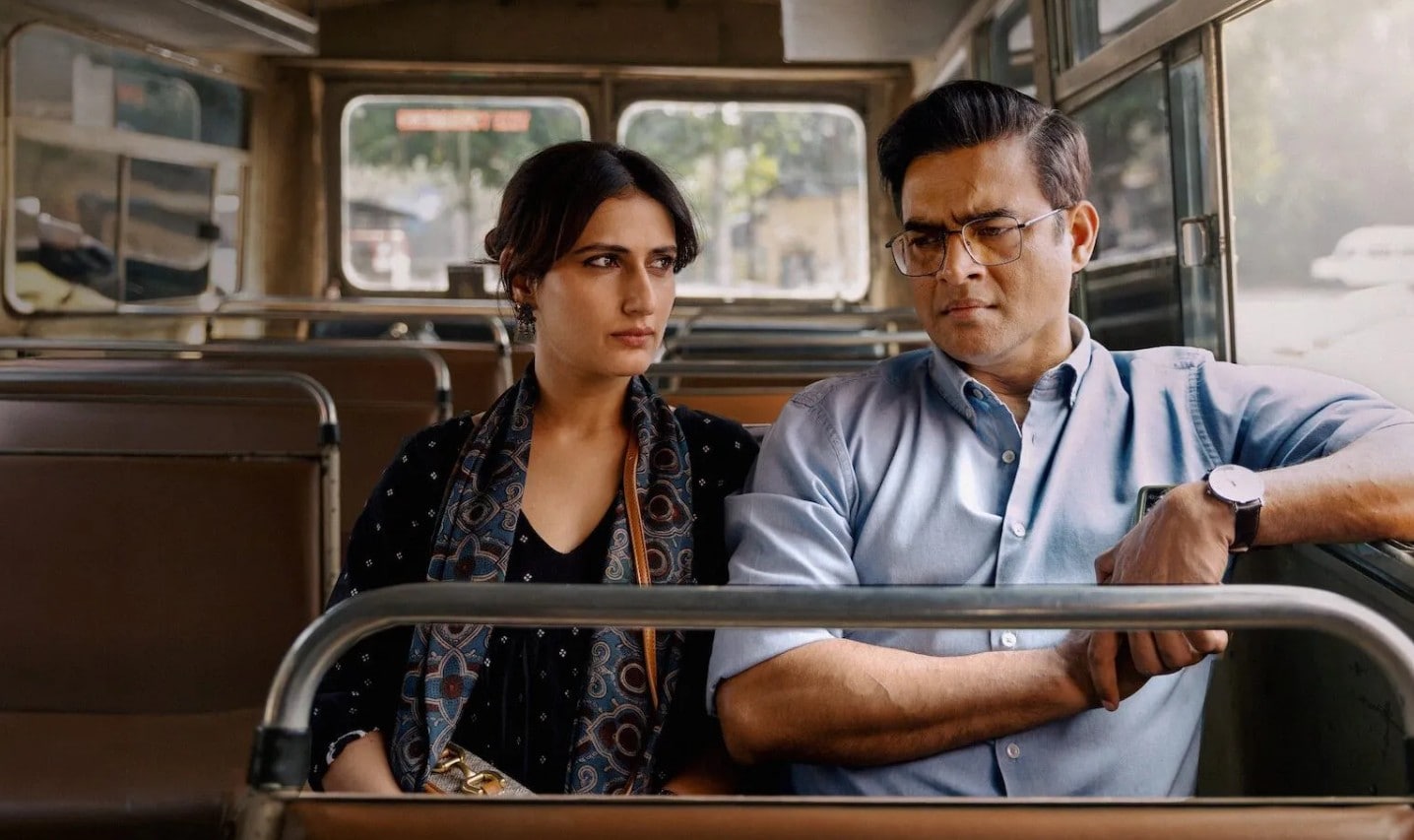
In the new Netflix film, Aap Jaisa Koi, love is a lesson. Shrirenu Tripathi (R. Madhavan), a middle-aged professor in Jamshedpur, is arranged to be married to Madhu Bose (Fatima Sana Shaikh), a French tutor in Kolkata. The attraction is immediate. Shrirenu, the 42-year-old virgin, had abandoned the idea of being with anyone, let alone someone like the radiant Madhu; he is naturally thrown off when she likes him back. Everything goes well till a roadblock surfaces. The man turns out to be conservative and the woman is not pleased.
In Hindi cinema, difference has been the cornerstone of love. Contrast - behavioural (introvert-extrovert) and social (class and caste) - attracts. It brings people together and emboldens them to fight against others. Love is the bridge where they meet, and the journey to be together supplies the story. The higher the stakes, the greater the love story.
The Veers And Salims Of Bollywood
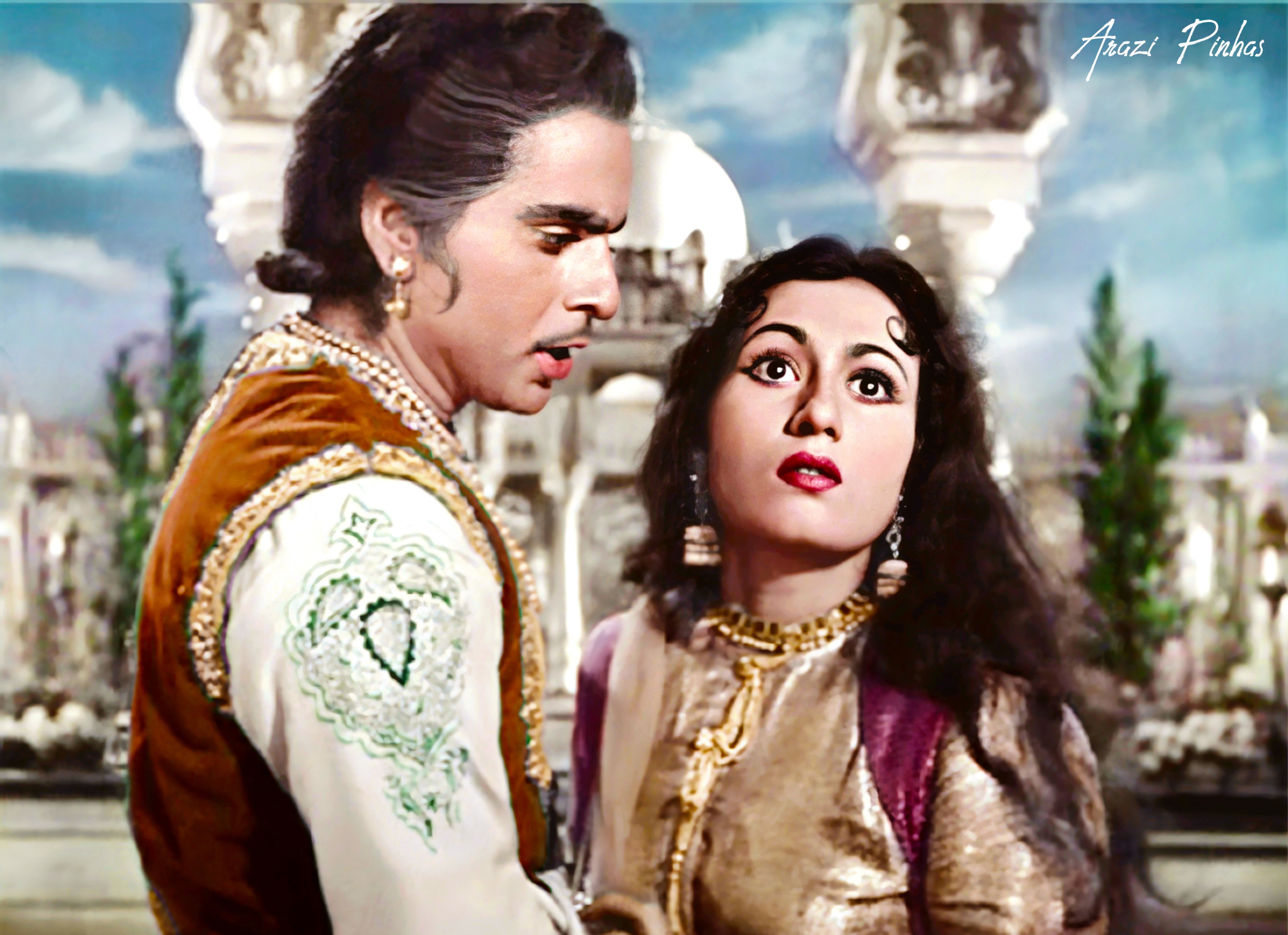
Classic love stories share similar friction, if not the arc. They also have something else in common: men, mostly, did the heavy lifting. If in Mughal-e-Azam (1960), Salim mobilised an army to protect Anarkali, the woman he loved, then in the post-liberalised India of Dilwale Dulhania Le Jayenge (1995), Raj crossed oceans to woo the unrelenting parents of Simran, the woman he loved. Prem in Maine Pyar Kiya (1989) surrendered a life of plenty to prove his love for Suman, and in Veer-Zaara (2004), a cross-border love story stacked against impossible odds, Veer, an Air Force officer from India, arrived in Pakistan to meet Zara.
Salim and Anarkali in Mughal-E-Azam (1960)
With time, female passivity changed faces without much change in fate. Audacious women were written, but the pluck felt superficial. Geet in Jab We Met (2007) ran away from home, but she still needed Aditya to bring her back; a decade later, Bitti Mishra in Bareilly Ki Barfi smoked with her father, and yet, her fate swung between two men. These are sweeping instances, punctuated, yes, by a few exceptions, but the reading holds water.
The Bengali Woman As An Antithesis
In comparison, someone like Madhu is portrayed as an antithesis. Her autonomy feels as attentive as complete. She has a well-defined job, her family rallies around her, she is vocal about her sexual needs and, more crucially, none of this changes when she falls in love. She takes efforts to meet Shrirenu as much as he does - a detail that speaks volumes about the shared duties they assume. Later, when he shames her, she calls him out.
Rani Chatterjee in Rocky Aur Rani Kii Prem Kahaani (2023) had the same attributes. She fell in love with Rocky, an indulgent man-child in Delhi with a closed world-view. Passion ran high, yet she refused to budge to tradition. In both cases, modernity is not a personality trait but a subtext of their persona. More similarities follow: they pair chiffon saris with sleeveless blouses. Madhu reads Sartre, and, if probed, Rani's favourite author might well be Simone de Beauvoir. Both are culturally inclined and philosophically profound. In private, they possibly worship Tagore and wept the day the Left government lost power in West Bengal. And, in case you did not notice, they are Bengali.
The 'Prototype'
The 'strong-willed Bengali woman' prototype has existed in Hindi films. Madhu and Rani stand on the shoulders of other self-reliant women like Piku (Shoojit Sircar's 2015 Piku) and Vidya Basu (Sujoy Ghosh's 2012 Kahaani). Sure, there are the many renditions of the uncompromising Parvati from Devdas, and Vikramaditya Motwane reimagined O. Henry's The Last Leaf as Lootera (2013) with an unyielding Bengali woman at the centre. But even other films have used this prototype. In Vijay Lalwani's Karthik Calling Karthik (2010), a twisted thriller on an introvert, the free-spirited female character is a Bengali;. Aziz Mirza's Phir Bhi Dil Hai Hindustani (2000) features a ruthless journalist who, of course, is also a Bengali.
Rani's stereotypical Bengali family in Rocky Aur Rani Kii Prem Kahaani (2023)
As real women started staking more claims in public spaces, women in love stories awaited a facelift. Naturally, it made sense for makers (Karan Johar and co) to harness this trope for a wider appeal, to reinvent the Hindi film heroine in romantic films as a Bengali woman in love. Culture comes with the territory, and so does defiance. But Rani and Madhu's representation has been a misrepresentation. If they are to be believed, then a Bengali woman reads Tagore for breakfast, recites Sukumar Ray for lunch, and finishes her day with a Satyajit Ray film. She lives in a giant house, her liberal outlook is without a blindspot, and even though she might have toured across the globe, College Street is her favourite street.
The Allure Of The 'Bhodromahila'
Granted that accusing Hindi filmmakers of exaggeration is akin to complaining about the monsoon in Mumbai. Some things go hand in hand. But the depictions have prompted a wider discourse, because by reiterating a certain kind, propped up by specific caste and class, these films seem to dictate that only the affluent, outspoken, plucky and Liberal Bengali woman (the Bhodromohila to the Bhadralok) is deserving of love. Or, that her story is worth telling. A couple of days back, an account on Instagram thoughtfully questioned the stereotype and asked: "Is every modern Bengali woman really a Rani Chatterjee or a Madhu Bose?" The answer, of course, is no.
But here's the thing: even a forthcoming Rani Chatterjee or a radical Madhu Bose, in the off chance that they exist, were not born as one. Unlike what might be suggested, liberalism is not stuffed in our potatoes, nor is it a virus Bengali women are born with (in a bizarre segue in Aap Jaisa Koi, a hitherto timid woman starts calling out patriarchy after falling in love with a Bengali man, like she has been "infected"). Even the most rebellious of Bengali women have had to earn their rebellion; even the most well-turned-out, sari-clad Bengali woman has had to fight for her sleeveless blouses. One is not born but becomes Rani Chatterjee or Madhu Bose.
Still Raising Boys
In a country like India, where women shrinking themselves to make space for others is the default, such characters are far-fetched on some days and aspirational on others. Perhaps that is the allure. Cinema, after all, is a site of wish fulfilment. But it is also the medium of representation, a space to see and be seen. By assuming that Bengali households are untouched by patriarchy - a belief that collapses when one considers the mounting cases of rape and abuse in West Bengal in this year alone - these films undercut and erase the struggle of Bengali women who stand up for themselves despite, and not because of, their surname. By not showcasing the labour built into it, they squander the chance of celebrating feminism.
Fatima Sana Sheikh as Madhu Bose in Aap Jaisa Koi (2025)
One can argue that such portrayals, however excessive, are designed to subvert the androcentric gaze of love. But women are somehow still getting shortchanged. If, in the past, they were offered ornamental parts in romantic films, then now, they are burdened with the task of teaching men. If, earlier, they waited for grown-up men to show up, then now, they are tasked with rehabilitating boys. Love is no longer the bridge where two people meet but an ideological minefield where one community is pitted against the other. And somehow, despite the cultural agency of female characters, the one gaining from it is - still - not them.
(Ishita Sengupta is an independent film critic and culture writer from India. Her writing is informed by gender and pop culture and has appeared in The Indian Express, Hyperallergic, New Lines Magazine, etc.)
Disclaimer: These are the personal opinions of the author
England batter Joe Root will be aiming to topple some more legends as the path towards Sachin Tendulkar's all-time Test tally becomes a little easier. During the fourth Test against England at Manchester, Root needs 120 more runs to overtake Australian great Ricky Ponting and establish himself as the second-highest run-getter in whites just behind Tendulkar. With the series in England's favour by 2-1 and Root having made up for mixed performances in the first two Tests with a century during the third Test at Lord's, the veteran would be aiming to continue being the ultimate run-machine for England. In three Tests so far, Root has scored 253 runs at an average of 50.60, with a century and a fifty each. He is the eighth-highest run-getter so far, a little disappointing given his gigantic standards this decade.
Root has a fantastic record in Manchester, being the all-time highest run-getter with 978 runs in 11 Tests and 19 innings at an average of 65.20, with a century and seven fifties. His best score is 254.
The stylish batter is currently the fifth-highest run-getter of all time in Tests, with 13,259 runs in 156 Tests and 285 innings at an average of 50.80, with 37 centuries and 66 fifties and a best score of 262. Scoring just 30 more runs will push him to fourth spot, outdoing Indian great Rahul Dravid (13,288 runs in 164 Tests), while 120 more runs will help him topple South Africa's Jacques Kallis (13,289 runs in 166 Tests) and Australia's Ponting (13,378 runs in 168 matches) to become the second-highest Test run-getter of all time.
Tendulkar is the highest run-getter in Tests, with 15,921 runs in 200 Tests and 329 innings at an average of 53.78, with 51 centuries and 68 fifties to his name. His best score is 248*.
Will Root overcome these legends and reach the number two spot?
India's Test squad for England series: Shubman Gill (C), Rishabh Pant (VC), Yashasvi Jaiswal, KL Rahul, Sai Sudharsan, Abhimanyu Easwaran, Karun Nair, Nitish Reddy, Ravindra Jadeja, Dhruv Jurel, Washington Sundar, Shardul Thakur, Jasprit Bumrah, Mohammed Siraj, Prasidh Krishna, Akash Deep, Arshdeep Singh, Kuldeep Yadav.
England squad for fourth Test against India: Ben Stokes (capt), Jofra Archer, Gus Atkinson, Jacob Bethell, Harry Brook, Brydon Carse, Zak Crawley, Liam Dawson, Ben Duckett, Ollie Pope, Joe Root, Jamie Smith, Josh Tongue, Chris Woakes.
In a significant advancement in cancer research, scientists at the University of Florida have developed an experimental mRNA vaccine that enhances the body's immune response against tumours. The study, published in Nature Biomedical Engineering, shows that this vaccine, when combined with standard immunotherapy drugs known as immune checkpoint inhibitors, produced a strong antitumor effect in mice.
What makes the finding especially promising is that the vaccine doesn't target specific tumour proteins. Instead, it activates the immune system as if it were fighting a virus. This effect was achieved by boosting the expression of a protein called PD-L1 within tumours, which made them more responsive to treatment.
Lead researcher Dr. Elias Sayour, a paediatric oncologist at UF Health, said in a news release this discovery could lead to a new way of treating cancer without relying solely on surgery, radiation, or chemotherapy. The study was supported by the National Institutes of Health and other major institutions.
If future studies in humans show similar results, the research could pave the way for a universal cancer vaccine that helps treat many types of difficult, treatment-resistant cancers.
"This paper describes a very unexpected and exciting observation: that even a vaccine not specific to any particular tumor or virus - so long as it is an mRNA vaccine - could lead to tumor-specific effects," said Sayour, principal investigator at the RNA Engineering Laboratory within UF's Preston A. Wells Jr. Center for Brain Tumor Therapy.
"This finding is a proof of concept that these vaccines potentially could be commercialized as universal cancer vaccines to sensitize the immune system against a patient's individual tumor," said Sayour, a McKnight Brain Institute investigator and co-leader of a program in immuno-oncology and microbiome research.
Until now, there have been two main ideas in cancer-vaccine development: to find a specific target expressed in many people with cancer or to tailor a vaccine that is specific to targets expressed within a patient's own cancer.
"This study suggests a third emerging paradigm," said Duane Mitchell, MD, PhD, a co-author of the paper. "What we found is by using a vaccine designed not to target cancer specifically but rather to stimulate a strong immunologic response, we could elicit a very strong anticancer reaction. And so this has significant potential to be broadly used across cancer patients, even possibly leading us to an off-the-shelf cancer vaccine."
For more than eight years, Sayour has pioneered high-tech anticancer vaccines by combining lipid nanoparticles and mRNA. Short for messenger RNA, mRNA is found inside every cell, including tumour cells, and serves as a blueprint for protein production.
This new study builds upon a breakthrough last year by Sayour's lab: In a first-ever human clinical trial, an mRNA vaccine quickly reprogrammed the immune system to attack glioblastoma, an aggressive brain tumour with a dismal prognosis. Among the most impressive findings in the four-patient trial was how quickly the new method, which used a "specific" or personalised vaccine made using a patient's own tumour cells, spurred a vigorous immune system response to reject the tumour.
In the latest study, Sayour's research team adapted their technology to test a "generalised" mRNA vaccine, meaning it was not aimed at a specific virus or mutated cells of cancer but engineered simply to prompt a strong immune system response. The mRNA formulation was made similarly to the COVID-19 vaccines, rooted in similar technology, but wasn't aimed directly at the well-known spike protein of COVID.
Two people were flung into the air after they were rammed by a speeding car in Delhi this evening. The pedestrians were crossing the road when the sedan hit them from behind. The disturbing moment was captured on CCTV in the national capital's Rohini area.
The victims were thrown several metres away due to the impact. Moments later, one of them was seen trying to get up as passersby ran to catch the driver of the car, which had vanished before it could be caught.
The video shows the car slowing down for a second before speeding away, leaving the injured behind.
The victims sustained serious injuries and were rushed to a nearby hospital. Their current condition is not known yet.
The Delhi Police has taken note of the CCTV footage and launched a hunt for the driver. Authorities have also appealed to the public for any leads that could help in identifying the vehicle and the person behind the wheel.
This incident highlights the growing concern over rash driving and the urgent need for stricter enforcement of traffic laws in the national capital.
Amid what is seen as a push from China and Russia to revive the Russia-India-China troika, sources have said that India has not agreed to any meeting in this format.
"No meeting of the RIC format has been agreed to at this point in time. There are no discussions underway on its scheduling," a source said.
The Ministry of External Affairs remained non-commital regarding the revival of Russia-India-China (RIC) mechanism in a weekly briefing. Spokesperson Randhir Jaiswal said, "This is a mechanism where three countries come together to discuss global and regional issues. When this meeting happens, we will work out a mutually convenient date and let you know."
The trilateral dialogue between Russia-India-China (RIC) hoped to create a trilateral Eurasian power that could balance Western dominance. The comments from India's foreign ministry comes months after Russian Foreign Minister Sergey Lavrov said that the work within the troika should be resumed.
"I would like to confirm our genuine interest in earliest resumption of the work within the format of troika - Russia, India, China - which was established many years ago on the initiative of Yevgeny Primakov (former Russian PM), and which has organised meetings over 20 times at the ministerial level since then, not only at level of foreign policy chiefs, but also heads of other economic, trade and financial agencies of three countries," Lavrov said in June.
China too expressed its support for Russia's initiative to revive the dormant Russia-India-China (RIC) troika, saying the trilateral cooperation not only serves the interest of the three countries but also the security and stability of the region and the world.
Russian news portal Izvestia on Thursday quoted Russia's Deputy Foreign Minister Andrei Rudenko as saying that Moscow expects the resumption of the RIC format and is negotiating on this issue with Beijing and New Delhi.
"This topic appears in our negotiations with both of them. We are interested in making this format work, because these three countries are important partners, besides the founders of BRICS," Rudenko said.
"Therefore, the absence of this format, in my opinion, looks inappropriate. In this regard, we expect that the countries will agree to resume work within the framework of the RIC -- of course, when relations between these states reach a level that allows them to work in a trilateral format," he said.
Earlier, the work was stalled because of the coronavirus and then later by the India-China military standoff at Eastern Ladakh in 2020.
Moreover, India is a member of the Quad, the alliance of the US, India, Japan and Australia which Beijing perceives as a group aiming to thwart its rise, hence there is increasing interest by Russia and China to revive RIC.
A violent clash broke out between the supporters of BJP MLA Gopichand Padalkar and NCP (Sharad Pawar group) MLA Jitendra Awhad in the lobby of the Maharashtra Legislative Assembly today. Shocking videos of the two groups pummeling each other and having to be dragged back by security personel are now doing the rounds of social media.
The altercation had started with a verbal spat outside the assembly building yesterday, during which both MLAs and their supporters had exchanged expletives.
A few days ago, Mr Awhad was caught on camera walking on the red carpet in the Vidhan Bhavan premises, saying "Mangalsutra thief".
The jibe was widely seen as directed at Padalkar, although no one was named. The video was widely circulated, sparking a debate between supporters of the two leaders.
Today, the situation escalated into full-blown physical violence.
Mr Awhad later posted on X about receiving abusive and threatening messages.
Mr Padalkar, who later met the Speaker and senior party leaders said that the whole incident was unfortunate and has apologised.
The matter then snowballed, with Mr Awhad's party colleague Rohit Pawar raising the issue in the assembly, demanding action. Speaker Rahul Narwekar has sought a report on the incident and promised a thorough investigation and subsequent action.
The incident has been condemned by all sides. While Sharad Pawar faction MLA Sana Malik and former Chief Minister Uddhav Thackeray expressed strong disapproval, Chief Minister Devendra Fadnavis and minister Ashish Shelar made their displeasure felt.
"Such incidents on the premises of assembly are unacceptable and bring shame to our name," Mr Fadnavis said.
"It comes under the jurisdiction of Assembly Speaker and Legislative Council Chairman. Both have taken serious cognizance of the incident which took place today. They will take strictest action against those who are found guilty," he added.
"Who gave these goons passes to enter the asembly premises?" said Uddhav Thackeray.
"Such incidents in the assembly premises are unacceptable and the Speaker should take action against whoever gave them passes... necessary action in this regard should be initiated... the Speaker, the Chief Minister and the Home Department should take cognizance of it... ultimately it is about safety and security of the MLAs," said Uddhav Thackeray.
For the first time since the pandemic upended work life five years ago, more than half the companies in the Fortune 100 have their employees fully back in the office, according to a report from real estate firm Jones Lang LaSalle Inc.
Hybrid schedules, which two years ago were offered by 78% of the 100 largest US companies by revenue, are now available at just 41% of them, while the share of Fortune 100 firms requiring full-time office attendance has jumped to 54% from 5%.
The shift to an in-office majority is helping to reshape the commercial real estate market. Office attendance in April and May was up 1.3% versus the same period last year, and the most desirable buildings are commanding record prices. JLL notes that "trophy buildings across Miami, New York City, San Francisco and other markets captured all-time high rents," with new construction asking $92.38 per square foot, the highest on record.
At the same time, with vacancies hovering above 22%, developers are pulling older buildings off the market. According to JLL, national office inventory declined by 700,000 square feet last quarter, as demolitions and conversions, mainly to residential, industrial or mixed-use developments, outpaced new construction.
The return of employees helps justify costly office leases in premium buildings. Among the 10 largest Fortune 100 companies, seven now require at least four days a week in-person, with the other three demanding full-time attendance, JLL found. According to the report, the average in-office requirement of the Fortune 100 rose to 3.8 days per week in the second quarter of 2025 from 2.6 days in the second quarter of 2023.
Amazon.com Inc. started prepping corporate staff in 2024 to return fully to in-person work by January. JPMorgan Chase & Co. announced on Jan. 10 that it was ending its hybrid-work option, too. More recently, Starbucks Corp. announced it will require corporate employees to work in the office four days a week starting Sept. 29, and remote managers were told they must relocate to Seattle or Toronto within a year. Workers who opt to leave will be given a one-time cash exit offer, based on documents seen by Bloomberg News.
The office mandates haven't been without their ups and downs for big employers, several of which had to regroup after running out of space for all of their returning workers. The trend is clear, though. After years of uncertainty, companies are tightening expectations and reasserting control over where work happens, and the era of hybrid work being the dominant option has come to a close. Executives are calling people back - and this time, they mean it.
A 36-year-old woman in the UK has caused a stir online after revealing that her gym has started banning women over the age of 24 from working out during certain hours. The woman anonymously detailed her story on the "Am I Being Unreasonable?" forum on the UK-based community site Mumsnet.com, a platform where women can seek advice about a variety of topics. She shared that she had recently received an email from her gym informing her of a policy change.
In her post titled 'Am I being unreasonable to think this is unfair?', the 36-year-old shared a screenshot of the message, which stated that the gym would be "reserved exclusively for females aged 12 to 24" from 4 pm to 7 pm Monday to Friday. "This update has been made in response to feedback and to better cater to our younger female members who require a dedicated, comfortable space during peak after-school and early evening hours," the text continued.
"Please note that outside of these hours, our Ladies Gym will continue to be available for all female members as usual. We appreciate your understanding and support as we continue to improve the experience for all our members," it added.
The woman mentioned that one of her main reasons for joining the gym was that it offered "ladies' hours" from 9 am to 7 pm on weekdays. But after the policy change, the woman said she would be cancelling her membership as the gym no longer fits her schedule. "But this is ridiculous, right?" she asked at the end of her post.
Internet users were quick to react to the post. Several users agreed with her, saying that she had every right to feel outraged by the new policy. "That's absolutely ridiculous! Why women of a certain age!? I'd feel furious, OP," said one person, per People.
"That's wild," said someone else, adding, "Once a week, fine. One hour a day (outside of peak times), fine. Three hours every weekday is mental. I'd cancel, too."
Some users were also confused about the rationale behind the policy change. "I wonder if they're trying to attract the influencer-type crowd for some free marketing," one user wrote.
"I suspect there is some insufferable person in charge who wants a young, hip and happening vibe, so isn't bothered about losing boring old middle-aged women," suggested another.
"Is it because that age group can't exercise at the same time as men without being hit on?" asked one user.
As Kabir Khan says every time, "Bajrangi Bhaijaan is a movie that keeps giving."
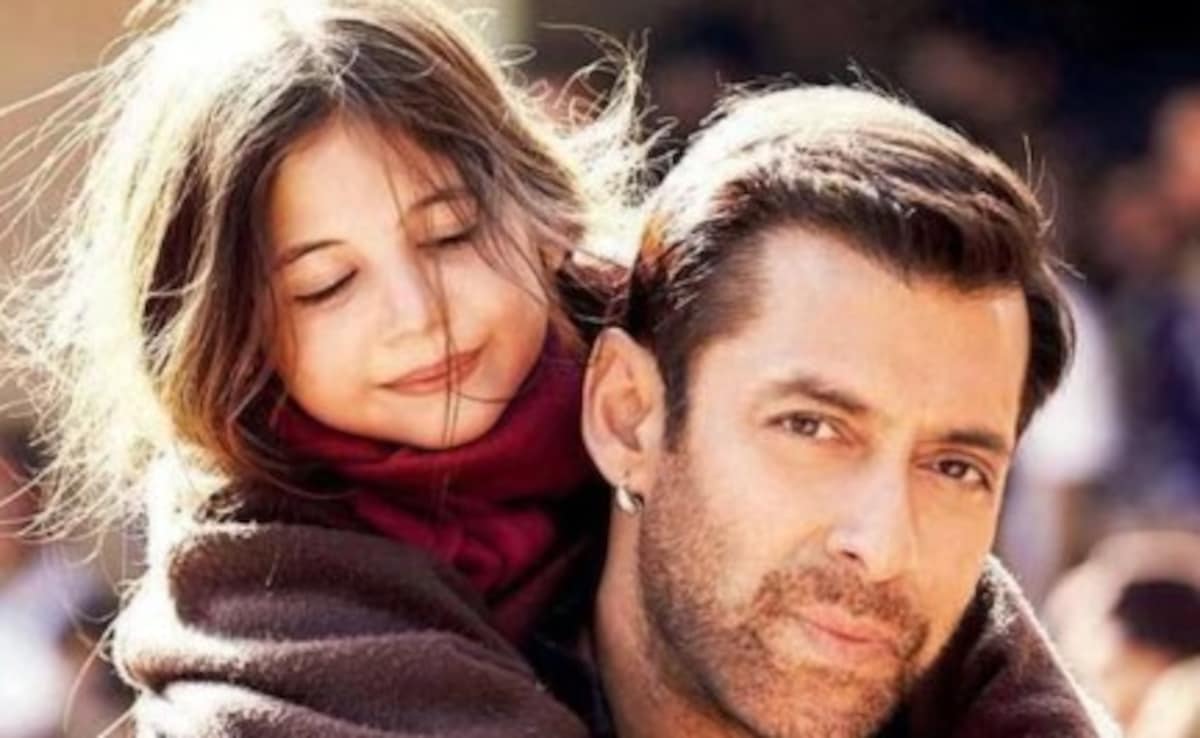
Indeed so, as the film completes 10 years on July 17, 2025, it brings back a wave of nostalgic memories of seeing Salman Khan as the devout Bajrangi and his love for a little mute girl, Munni (Harshaali Singh). What unravels is an unconventional love story imbued with humanity.
The film explored the India-Pakistan conflict through the story of a little girl, Munni (Harshaali Malhotra), who gets estranged from her mother in India. It is with the help of Bajrangi (Salman Khan), a devout Indian who takes a pledge to bring her back home to Pakistan. Despite the tensions between the two nations, the film delivered a message of hope and unity.
In an exclusive conversation with NDTV, Kabir Khan talks about why Salman Khan was always his first choice and how Bajrangi Bhaijaan set a bar to match with his other films.
"Salman Loves Children, And He Felt Strongly For The Film"
As many things go with the Internet, there was a mention of how Bajrangi Bhaijaan was initially offered to Hrithik Roshan and Aamir Khan.
Kabir Khan laughs it off as he says, "You can't believe anything that is on the Internet. But yes, before Bajrangi Bhaijaan's screenwriter V Vijayendra Prasad brought the film to me, it was offered to Aamir Khan."
But as for Kabir Khan, there wasn't an iota of doubt that he wanted Salman Khan to lead the film.
Citing his reasons, the filmmaker says, "What the film stands for is something that I knew Salman would identify with very strongly. He also loves children. He was stunned when I narrated the film to him, and that's why it became his first production. Bajrangi happened because I had the privilege of having directed him in a film before that, which is Ek Tha Tiger. It was through that film that we got to know each other better, and I have spoken before about how we had a lot of discussions and arguments too. Which is good, it helped us."
"Soon, there were talks about the next film that we would discuss. Since Ek Tha Tiger was a huge hit, the industry was hoping for another hit action film. But I knew, I didn't want to repeat what I've already done with Salman, and in the course of the conversations that I used to have with him, which were not about films, I learnt about things that Salman feels deeply about. And that's how he ended up in Bajrangi."
"Kareena Had Tears In Her Eyes"
Kareena as Rasika owned the limited screen time that she was given. But not once did she question it.
Kabir Khan recalls, "I was very keen on having her onboard because Kareena's character is the voice of reason in the film. But I was also aware that Kareena was a huge star."
— Kareena Kapoor Khan FC (@KareenaK_FC) July 10, 2015
He continues, "I knew that Kareena's character is predominantly less in the second half.
I told her that it's not as big a role, but it's a very important role, and therefore, if you don't mind, I want to narrate the whole film to you. And if you like the film, then please, come on board. And I narrated the whole film to her, and she had tears in her eyes. At the end of it, she said it's a beautiful film, and I just want to be a part of it. And that was very gracious of her."
Kabir Khan On Munni (Harshaali Malhotra): "She Wasn't Starstruck By Salman"
Harshaali Malhotra was just 6 years old when she played Munni aka Shahida. Recalling the good times, Kabir Khan says, "She knew Salman, she had seen his films, and she knew that he's big, but she also had this great confidence in herself. And I remember she went and she told Salman that "I want to be a star."
A still from the film
"She's 17 years old now. I've spoken to her mother once in a while, and I'm excited that she's doing a film now. She was fabulous. Bajrangi Bhaijaan wouldn't be half the film without her. She auditioned over 2000 girls, and she fit the bill."
Has Bajrangi Bhaijaan Become The Gold Standard To Which All Kabir Khan Films Are Compared?
Kabir Khan's signature style of films included a cocktail of socio-political issues, a vast range of global politics and underneath it all, human emotions that uplift the storytelling.
What worked miraculously for Bajrangi Bhaijaan was the determination of a simpleton like Bajrangi, who would stop at nothing to ensure the lost child is reunited with her mother in Pakistan. And that's exactly the human touch that stayed with the audience, and 10 years down the line, it still resonates.
But does that make it sometimes a task to match up to the expectations of the audience?
Kabir Khan laughs, "Salman and I are fortunate to have a challenge like this, if any. It's been 10 years now, but every week it's on television. It's still running in Japan. So it's very difficult sometimes to live up to a film that has reached that level of appreciation in the audience's mind. Which brings me to the chatter around a sequel to Bajrangi."
Watched Bajrangi Bhaijaan (2015)
A lovely, warm fable with a deeply humanist message. Good musical accompaniment (the chicken song 😂) and plenty of welcome humour to lighten the emotional moments. The ending, however, weighs 1 tonne
3,5/5 pic.twitter.com/78846qnvYV
— Marie-justalittleSRKian 𓀠🇧🇪 (@MHeerins) July 13, 2025
He continues, "Right now, the conventional wisdom in the industry is that anything that is a franchise will work. So, have a franchise of one of the biggest films. People think we are stupid, but the reason why we're not doing it is that the last thing Salman and I would want is to make a sequel for the wrong reasons. It's like exploiting the commercial success of a film that is so loved. Unless we get a story that we feel strongly about, let the legacy of Bajrangi Bhaijaan prevail."
Kabir Khan On Censorship: "You Have To Choose Your Battles"
Censorship is one of the most trending topics of discussion in the entertainment industry right now. The stakes increase when the film is set against a political backdrop, as was the case in Bajrangi Bhaijaan.
In light of potential communal tension that may arise, the Central Board of Film Certification (CBFC) had cleared Bajrangi Bhaijaan after 5 cuts. The Ministry of Home Affairs (MHA) had onboarded two muslims on a seven-member committee to clear the film.
Some heavy censorship was done, particularly in Pakistan - from removing a shot of the Pakistan embassy being attacked in Delhi, scenes featuring Pakistani soldiers and the concluding climax where people from the Pakistan side of the border chanted "Bajrangi Bhaijaan".
Kabir Khan says that, mostly everything was sorted amicably with the censorship board, and he stood his ground where he felt the demand was unjustified.
He tells NDTV, "There were certain points at which I stood my ground and I argued. At the end of the day, you have to choose your battles. So if there's something that is irrelevant and nothing that will affect the soul of the film, I agreed. The censor board and the committee that saw it loved it. There was a wrong sort of idea about the film. But all's well that ends, and they understood when they saw the film."
Kabir Khan On Filmmakers Wary About Making Films With Political Background
10 years is a long time, as Kabir Khan agrees. The scenario and audience's reception of films with social-political themes have vastly changed. In the age of social media, one never knows what might end up hurting one's emotional or religious perspectives.
Does that make directors wary of such subjects?
Kabir Khan says, "A lot of films get attacked. Somebody in some community will get up and say what they don't like. Unfortunately, the more high-profile your film is, the more it gets opened up to these kinds of attacks. Some people are only doing it for publicity. Some people might have a genuine grievance against the film."
"Sometimes these controversies help the business of the film, and those films end up becoming more successful. But there are a lot of people who also just do it for 5 seconds of fame. So yes, I think people become a little wary, and so maybe they're going through their material more carefully. I don't think anybody wants to hurt anyone deliberately," concludes the director.
As the film celebrates yet another milestone of clocking 10 years of its release, Kabir Khan stands by his only mantra for a good film - "I have a feeling that my heart is in the right place, I follow my heart."